
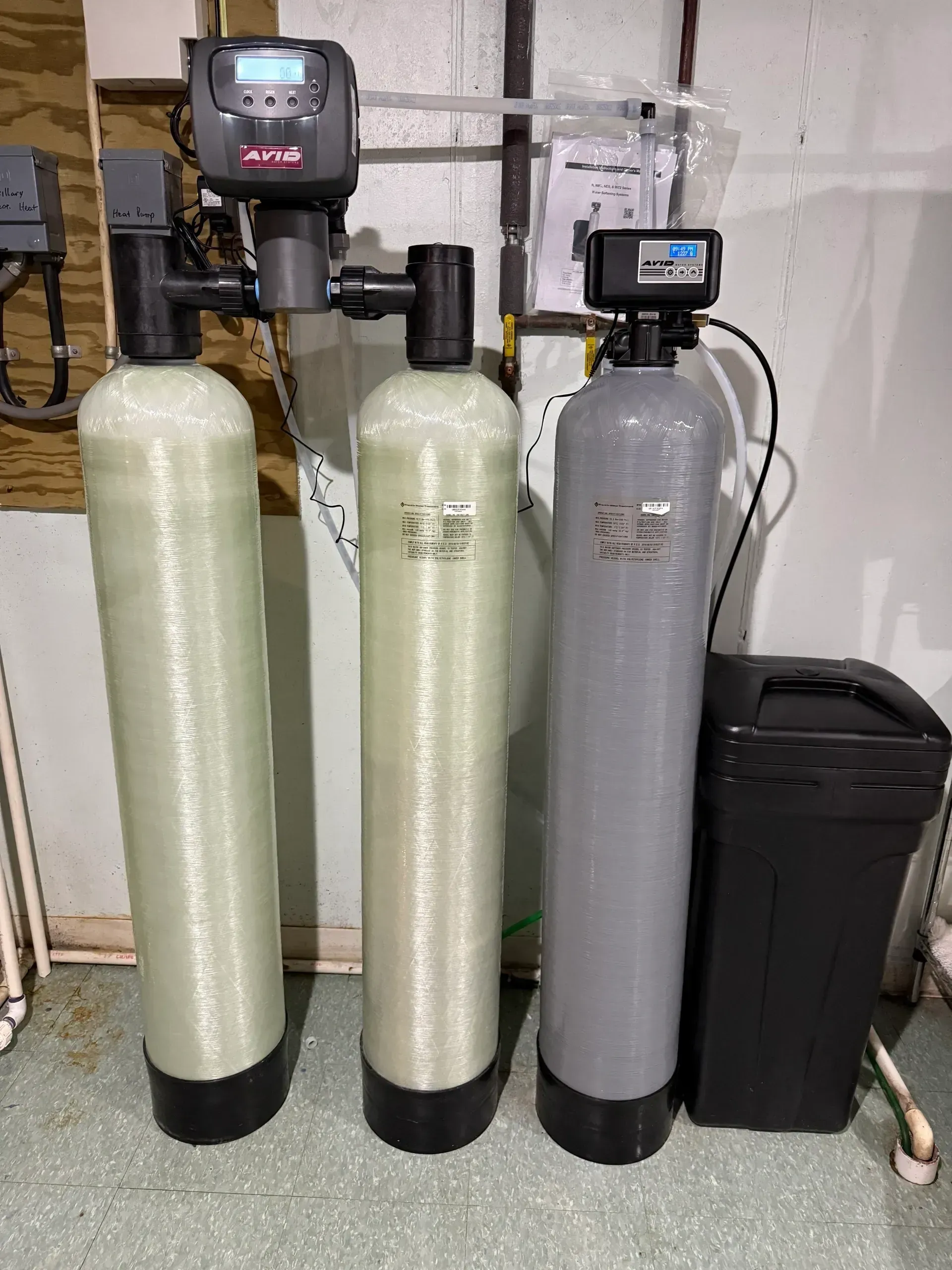
Plumbing Systems Protected From Mineral Damage
Water Conditioning & Softening in Dowagiac for properties experiencing scale buildup and appliance efficiency loss
White crusty deposits appear on faucets, water heaters take longer to warm up, and appliances wear out faster than they should. Lakeside Plumbing installs, repairs, and maintains water conditioning and softening systems throughout Dowagiac that address hard water problems at the source. Properties with well water or municipal supplies high in calcium and magnesium benefit from treatment systems that prevent mineral accumulation before it reaches fixtures and equipment.
Hard water contains dissolved minerals that precipitate out when water is heated or evaporates, forming scale deposits inside pipes, on heating elements, and throughout plumbing fixtures. These deposits reduce water flow, force water heaters to work harder, and shorten the functional life of dishwashers, washing machines, and other water-using appliances.
Schedule a water evaluation to determine the specific hardness level and treatment approach for your property.
What Softened Water Changes in Daily Use
Water softening works through ion exchange, where resin beads inside the treatment tank capture calcium and magnesium ions and release sodium or potassium ions in their place. The system regenerates periodically by flushing the resin bed with a brine solution, which recharges the beads and sends the collected minerals to the drain.
After a conditioning system is installed and operating, you notice dishes come out of the dishwasher without spots, soap and shampoo lather more readily with less product needed, laundry feels softer without extra rinse agents, and the white buildup that used to form around faucet bases and showerheads stops appearing. Water heaters maintain their efficiency because scale no longer insulates heating elements from the water.
System sizing depends on household water usage, the measured hardness level in grains per gallon, and whether the property uses municipal water or a private well. Installation includes connecting the unit to the main water line, installing a bypass valve for maintenance access, and setting the regeneration cycle based on actual consumption patterns rather than a fixed timer.
Questions Property Owners Ask Before Installation
Homeowners in Dowagiac often want to understand how these systems work and what changes they'll notice after installation.
How do you determine what size system a property needs?
Water hardness is measured in grains per gallon through testing, then daily water usage is calculated based on occupancy and fixture count to size a system that regenerates efficiently without running out of capacity during peak use periods.
What happens to water during a regeneration cycle?
The system temporarily stops softening and either switches to bypass mode or continues supplying water that hasn't been treated, which is why regeneration is typically scheduled for overnight hours when water demand is lowest.
Why does hard water cause more problems in water heaters than in cold water lines?
Heating accelerates mineral precipitation, which is why scale builds up fastest on water heater elements and inside the tank itself, reducing heat transfer efficiency and eventually causing element failure.
How often does the salt or potassium need to be refilled?
Refill frequency depends on system size, water hardness, and household usage, but most residential systems require salt addition every four to eight weeks to maintain the brine solution needed for regeneration.
What maintenance does a softening system require over time?
The resin bed typically lasts ten to fifteen years if the system is properly maintained, but the brine tank should be cleaned annually to prevent salt bridging, and the control valve may need servicing if regeneration cycles become irregular.
Lakeside Plumbing provides customized water treatment solutions based on tested water quality and your property's specific usage patterns. Request an estimate for a system that matches your household size and hardness levels.