Repairs for Slow Drains and Blockage in Sewer Lines
Sewer Line Repair in Dowagiac for residential laterals affected by root intrusion and aging pipe materials
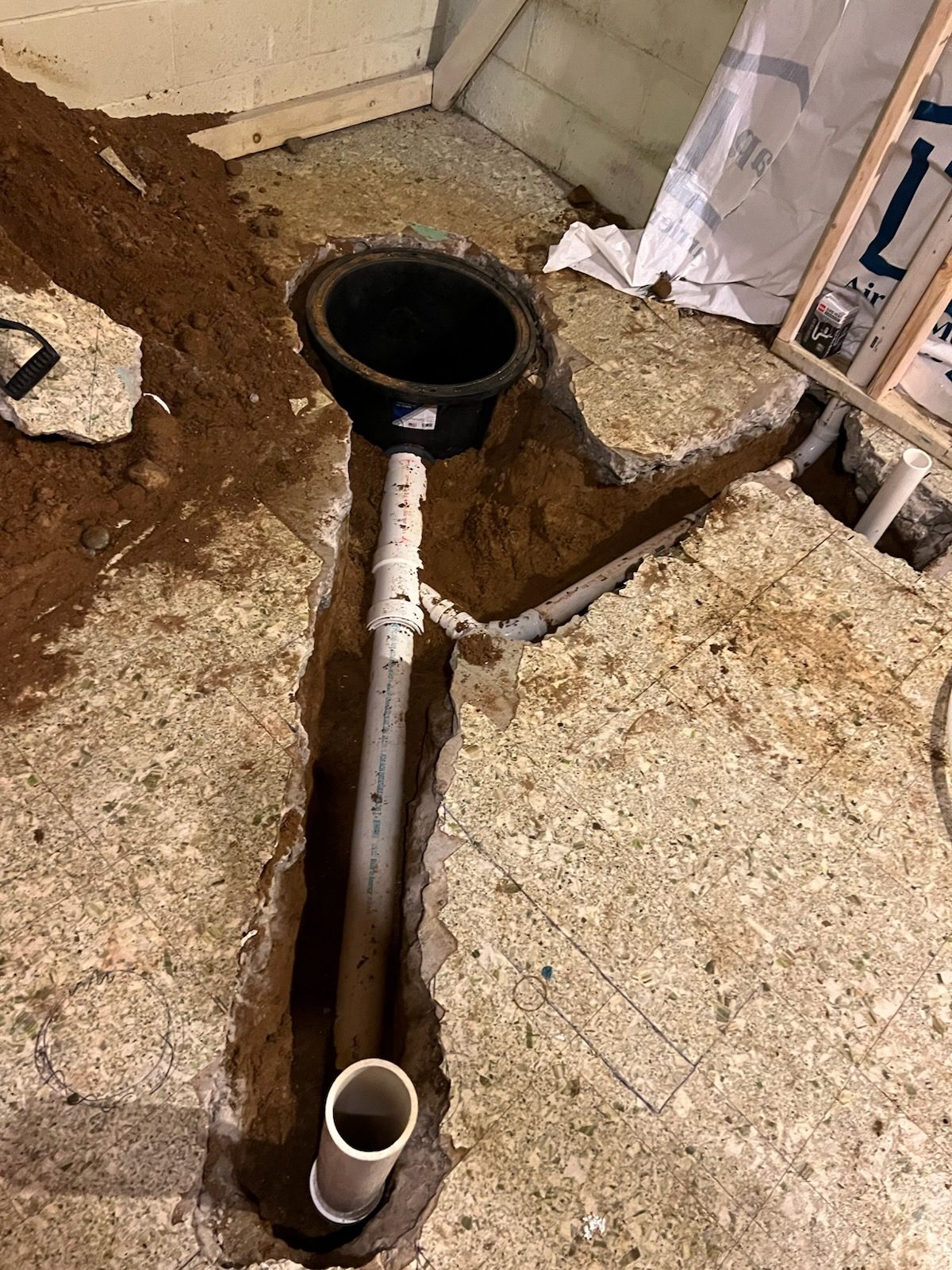
Mature trees along Dowagiac Creek corridors and in older neighborhoods like Pokagon Township produce root intrusion in clay and cast iron sewer laterals, which causes slow drains, backups, and complete blockages. The approach used by Lakeside Plumbing Company involves inspecting the full lateral before selecting a repair method, which confirms whether spot repair or full replacement is necessary and identifies the exact failure location. This prevents digging the wrong section of yard and eliminates guesswork about where the root mass or pipe collapse actually occurred.
Sewer line repair begins with camera inspection threaded through the cleanout or main drain, transmitting video footage that shows pipe condition, root penetration points, and structural failures like cracks or offsets. The camera head includes a locator beacon that marks the failure point from above ground, so excavation happens at the precise spot rather than trenching the entire lateral to find the problem.
Request a camera inspection to locate the failure before committing to excavation or replacement.
What Camera Inspection Reveals Before Digging
Camera footage shows the difference between a root intrusion that can be cleared and relined versus a collapsed section that requires excavation and pipe replacement. The video also identifies pipe material, joint condition, and whether the problem is isolated to one section or distributed along the entire lateral, which determines whether spot repair addresses the issue or just delays a full replacement.
After sewer line repair, drains flow at normal speed without gurgling, backups stop occurring during heavy water use, and slow drainage in multiple fixtures resolves simultaneously. You'll notice toilets flush completely without water rising in the bowl first, and floor drains no longer back up during laundry or dishwasher cycles. Odors from sewer gas leaking through cracked pipe sections disappear once the damaged lateral is replaced or relined.
Permit requirements apply to sewer lateral work in most municipalities, and documentation is handled as part of the repair process. Warranty coverage includes both the repair method used and the labor performed, with specific terms depending on whether the work involved spot repair, full replacement, or trenchless relining. Camera equipment used during inspection is owned and operated in-house, which eliminates subcontractor delays and allows same-day diagnosis for most service calls.
Questions Before Starting Your Project
Sewer repair decisions hinge on understanding what the camera reveals and how different repair methods address the specific failure mode identified.
How much does sewer line repair cost in Dowagiac?
Cost depends on whether the repair involves spot excavation, full lateral replacement, or trenchless methods, and the camera inspection determines which approach is necessary based on pipe condition and failure location.
What does a sewer camera inspection show that other diagnosis methods miss?
The camera shows the exact location of root intrusion, the severity of pipe deterioration, whether the lateral has proper slope, and if the failure is a single break or widespread damage, all of which determine the most effective repair method.
Do I need a specialist for sewer line repair or can any plumber handle it?
Sewer lateral work requires camera inspection equipment, knowledge of excavation depth and permit requirements, and experience interpreting pipe condition from video footage, which not all general plumbers provide.
Why do trees near Dowagiac Creek cause sewer line problems?
Tree roots follow moisture and nutrient sources, and sewer laterals provide both, so roots penetrate joints in clay pipe or corroded sections of cast iron, expanding inside the pipe until they block flow completely.
How long does sewer line repair take once the problem is located?
Spot repairs typically complete in one to two days depending on excavation depth and soil conditions, while full lateral replacement or trenchless relining may extend to three to five days including permit approval and inspection scheduling.
Lakeside Plumbing Company uses camera inspection to locate sewer failures across Southwest Michigan before excavation decisions are made. Schedule a diagnostic visit to confirm your lateral condition and explore repair options based on video evidence.