
Drinking Water Purified Below Surface Contaminant Levels
Reverse Osmosis in Dowagiac for properties where dissolved solids, metals, or chemical residues affect drinking water quality
In Dowagiac, groundwater chemistry varies by well depth and geology, with some areas showing elevated total dissolved solids or trace contaminants that standard filtration doesn't remove. Lakeside Plumbing installs reverse osmosis systems that process water through multiple filtration stages and a semipermeable membrane, significantly reducing dissolved contaminants and delivering purified water to a dedicated faucet at the sink. These systems are sized for drinking and cooking use rather than whole-home treatment, which keeps water waste reasonable and maintains adequate production for daily needs.
The reverse osmosis process forces water through a membrane with pore openings measured in angstroms, small enough to block dissolved salts, heavy metals, nitrates, fluoride, and many organic chemicals while allowing water molecules to pass through. Pre-filters remove sediment and chlorine before water reaches the membrane, and a post-filter polishes the water before it enters the storage tank.
Schedule a consultation to review your water test results and determine whether reverse osmosis addresses your specific contaminant concerns.
What Proper Reverse Osmosis Systems Require
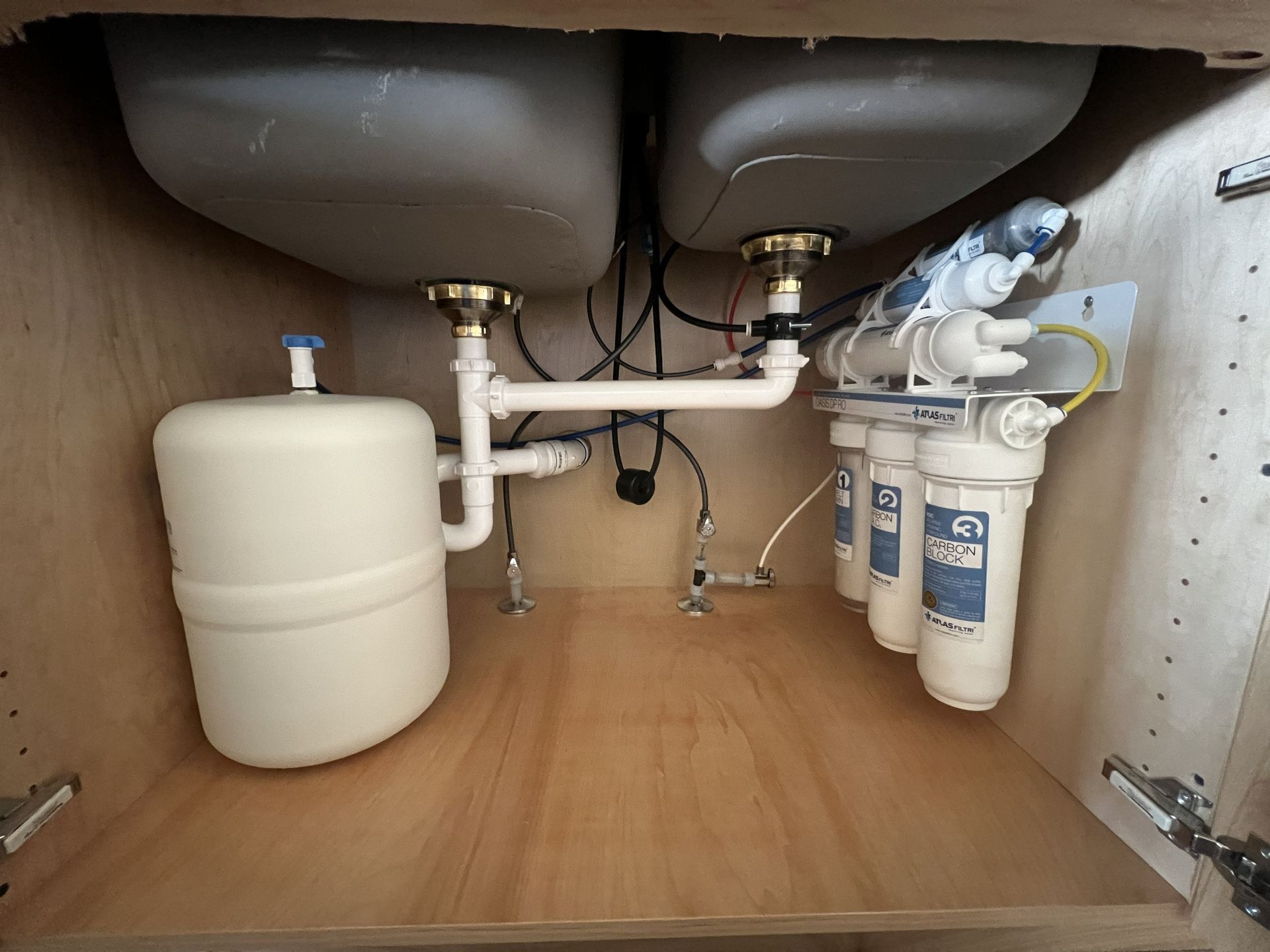
Installation requires mounting the multi-stage filter assembly under the sink, running a supply line from the cold water shutoff, drilling a hole in the sink or countertop for the dedicated faucet, and connecting a drain line to carry away the reject water that doesn't pass through the membrane. A pressurized storage tank holds treated water so it's available on demand without waiting for the system to process water in real time, which happens slowly due to the membrane's flow restriction.
After the system is installed and the storage tank fills, you notice drinking water tastes noticeably cleaner without the mineral or chemical flavors present in untreated tap water, ice cubes are crystal clear, and beverages made with reverse osmosis water have more distinct flavor because contaminants aren't masking subtle tastes. The dedicated faucet provides purified water on demand without affecting the rest of the household plumbing.
The membrane rejects a portion of the feed water to carry away concentrated contaminants, which means these systems discharge several gallons to the drain for every gallon of purified water produced. Filter replacement schedules vary by stage—sediment and carbon pre-filters typically need replacement every six to twelve months, while the membrane itself lasts two to four years depending on feed water quality and usage volume.
Answers to Frequent Service Questions
Homeowners considering reverse osmosis systems often ask about performance, maintenance, and what the system actually removes.
What contaminants does reverse osmosis remove that other filters don't?
The membrane removes dissolved solids including heavy metals like lead and arsenic, nitrates, fluoride, sodium, sulfates, and many pesticides and pharmaceuticals that pass through carbon filtration because they're molecularly dissolved rather than suspended particles.
Why does reverse osmosis waste water during operation?
The membrane must be continuously flushed with reject water to carry away the concentrated contaminants that don't pass through the membrane pores, preventing fouling and maintaining flow rate over the membrane's service life.
How long does it take for the storage tank to refill after heavy use?
Production rates typically range from twenty-five to seventy-five gallons per day depending on system size and feed water pressure, so a depleted tank may take two to four hours to refill, which is why proper tank sizing matters for households with higher drinking water demand.
What happens if filters aren't replaced on schedule in Dowagiac systems?
Sediment clogs pre-filters and restricts flow to the membrane, chlorine damages the membrane material and causes premature failure, and the post-filter becomes saturated, allowing tastes and odors to return even though contaminant removal continues.
Can reverse osmosis systems work with well water or only municipal supplies?
Well water can be treated if it's first conditioned to remove iron and manganese that would foul the membrane, and if hardness is controlled because calcium buildup accelerates membrane scaling and reduces effectiveness.
Lakeside Plumbing provides reverse osmosis installation, filter replacement services, and system maintenance to keep your drinking water system operating efficiently. Contact us to discuss your water quality goals and request a system estimate tailored to your household's usage patterns.